
Things to do in Higashiizu
Atagawa’s tropical garden is the best first stop without a car: crocodiles, orchids and red pandas are close to the railway. Follow it with Inatori’s hanging decorations and a sea-facing bath; save the uplands or the towns farther south for another day.
Short visits and full days
| Outing | What you see | Time and effort | Access from the coast |
|---|---|---|---|
| Atagawa garden | Tropical houses, crocodilians and red pandas | Half a day across three sloping areas | Main entrance one minute from Izu-Atagawa |
| Animal Kingdom | Large herbivores and white tigers | About 1½ hours for the zoo or three for the park; walking outdoors | Route bus from Izu-Inatori |
| Inatori town | Sewn ornaments, harbor and sea-view baths | A full day with lunch and bathing; town walking | Local train to Izu-Inatori |
| Hosono Highlands | Open grassland and island views | 30–140-minute circuits from Highlands Square; steps on the paths | Seasonal weekend bus from Inatori; taxi or car on weekdays |
| Seven Waterfalls | Wooded gorge and basalt falls | 850 m promenade, about one hour one way; extra time to return | Bus inland from Kawazu |
For a full day in Atagawa, start among the garden’s tropical plants and animals, eat at the fruit parlor and walk down to the seafront. Atagawa Prince admits day bathers in the afternoon. The main crocodile and botanical gardens and the annex orchard spread over the hillside.
In Inatori, walk from the hanging decorations to the port shops, then bathe facing the sea. Animal Kingdom is uphill, reached by bus from the station, with lunch available in the park. Both outings are self-guided. On a two- or three-night trip, leave the longer grassland and waterfall walks for a full day between arrival and departure.
Atagawa’s tropical garden
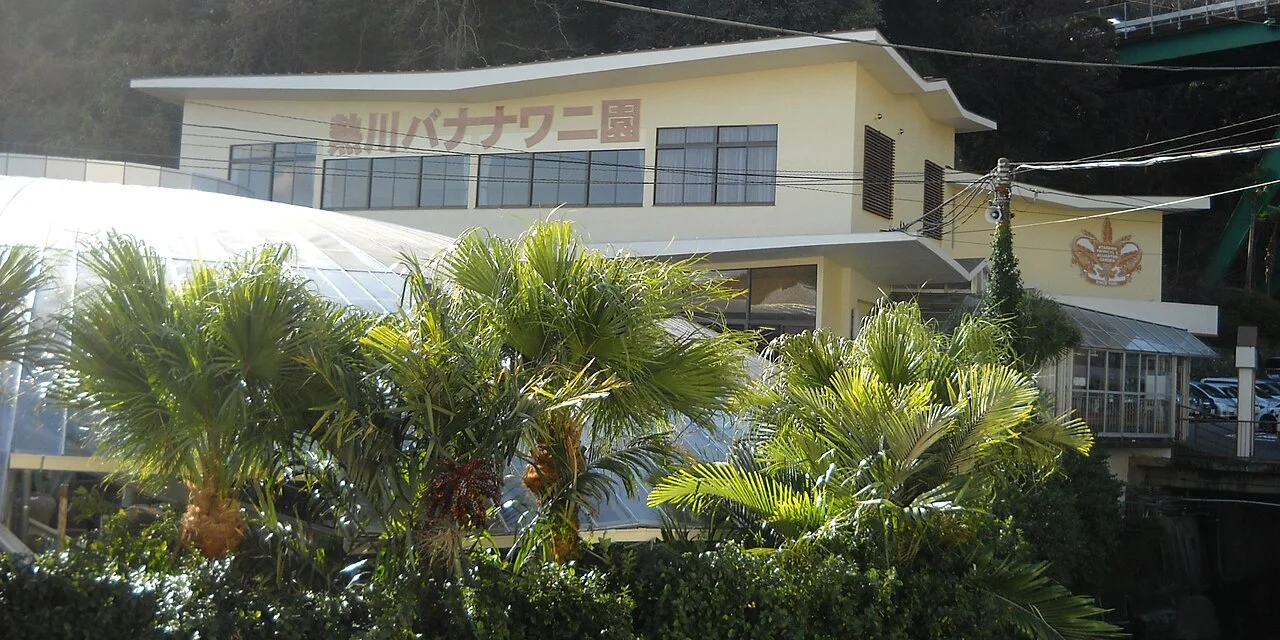
Under the domed roof at Atagawa Tropical & Alligator Garden, glass-sided enclosures reveal crocodilians from the side and underneath. Beyond them, eight greenhouses hold orchids, hibiscus and giant water lilies. Hot-spring heat warms the plants and the Amazonian manatee’s water. The annex has red pandas and fruit trees; bananas grown here become parfaits, pancakes and juice at the fruit parlor.
One ticket covers the main and annex grounds: adult entry is ¥2,000 (about US$13), with children from age four through elementary school paying ¥1,000 (about US$6.30) and younger children free. The garden opens daily from 09:00 to 17:00, with entry ending at 16:30. The main entrance is one minute from Izu-Atagawa; the paths continue uphill through the garden’s three areas.
Izu Animal Kingdom
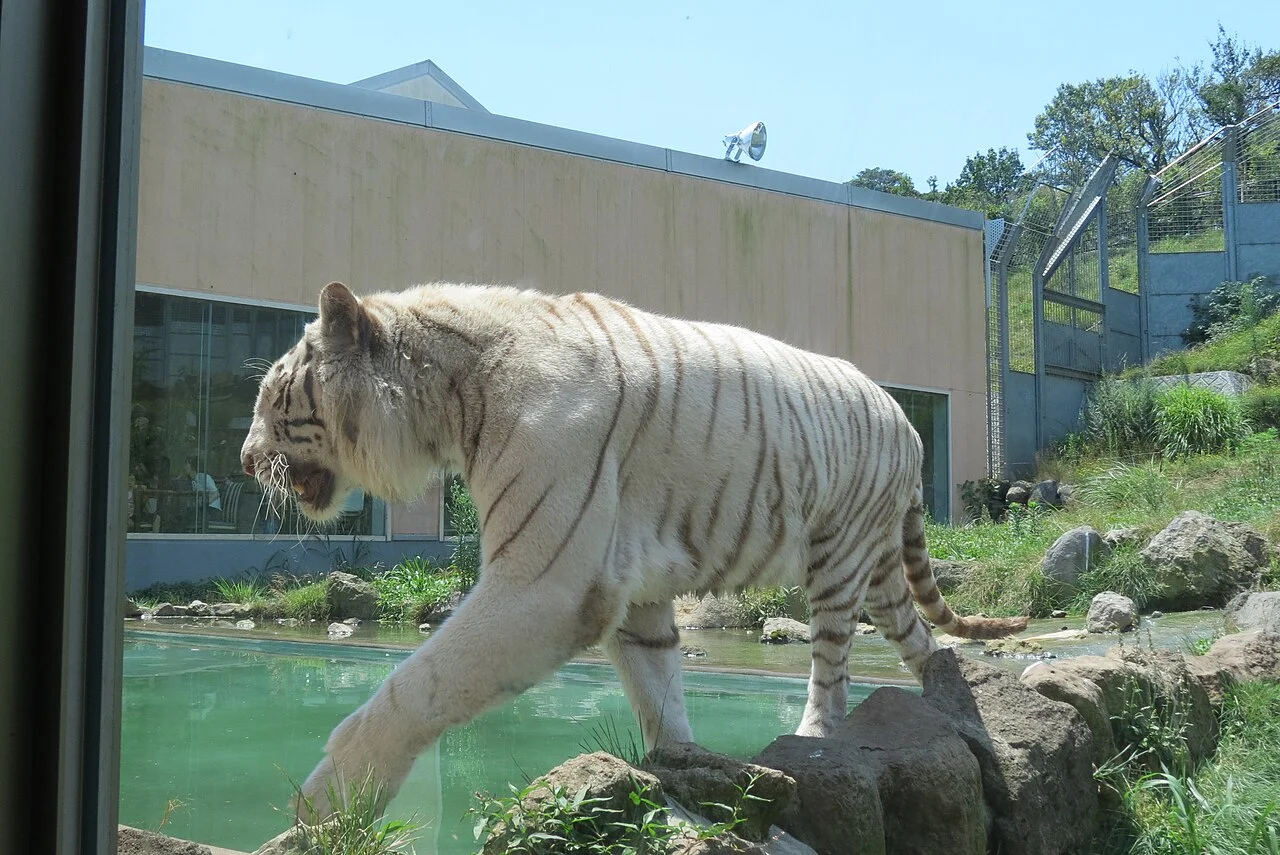
Giraffes, rhinos and zebras stand beside the Walking Safari at Izu Animal Kingdom. Visitors follow a path through the herbivore displays; white tigers, lions and cheetahs are elsewhere in the animal zone. The predator house has indoor viewing in rain, while the larger herbivores are outdoors. Higher up, the amusement area looks over Inatori and the Izu islands.
Allow about 1½ hours for the zoo or three hours for the wider park. Adult admission ranges from ¥2,600–3,200 (about US$16–20) by calendar band; ages 4–12 pay ¥1,300–1,600 (about US$8.20–10). Rides and feeding cost extra. The October winter hours are 09:30–16:00, with last entry at 15:00. A route bus from Izu-Inatori serves the entrance.
Inatori’s hanging decorations
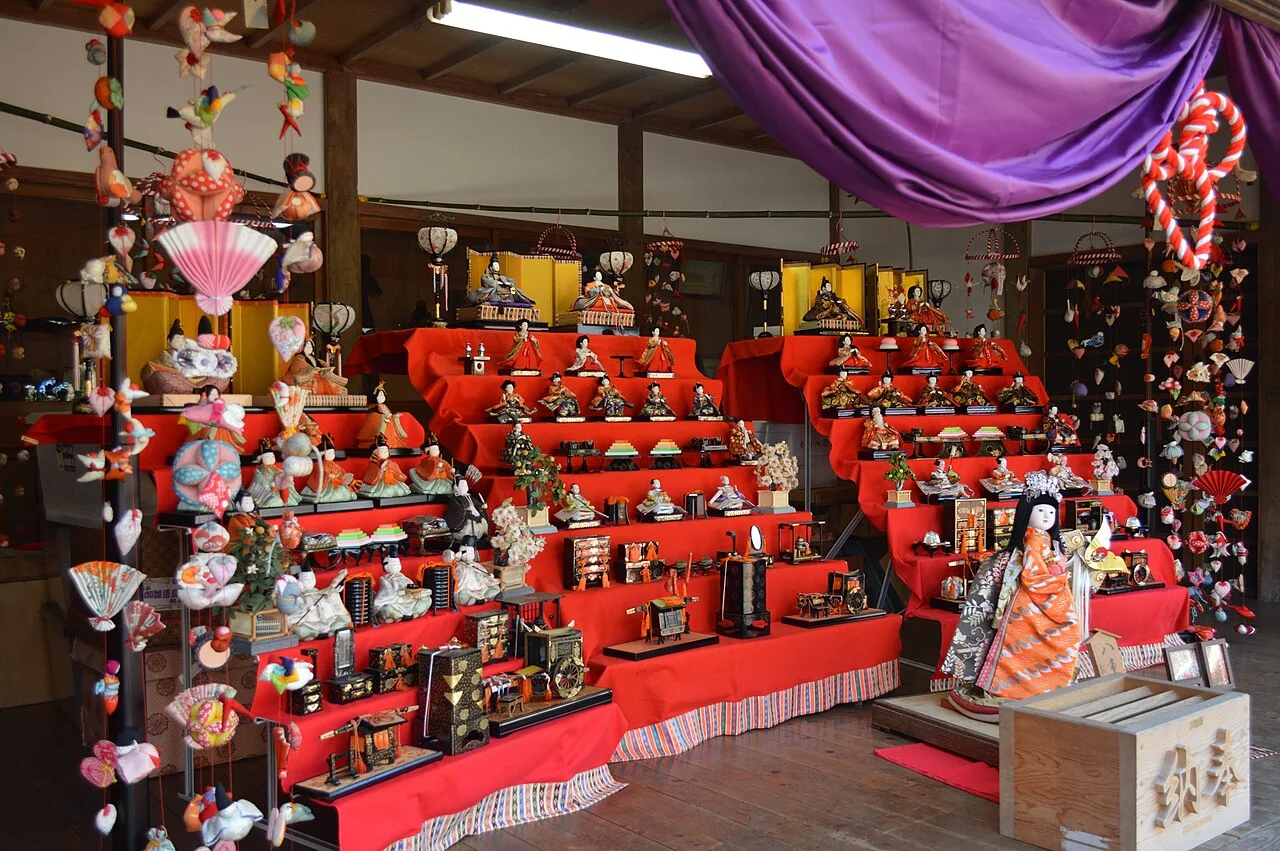
Little cloth animals, flowers and other lucky motifs hang in colorful strings beside Inatori’s Hina dolls. Families began sewing these decorations in the late Edo period as wishes for girls’ health and happiness. The main exhibition hall, Hina no Yakata, is in Bunka Park at 1729 Inatori; the tradition also appears at other displays around town. At Hachiman Shrine, rows of dolls stand on red tiers among the hanging ornaments.
The autumn exhibition runs from September 19 to November 30, 2026, 09:00–16:00, with final entry at 15:40. Admission is ¥500 (about US$3.20); elementary-school children and younger enter free. Thursdays are the usual closure outside festival periods. Afterward, Inatori’s harbor has fish and citrus shopping at Korasshe, the fishery and agricultural cooperatives’ outlet. Kinmedai, the bright red splendid alfonsino, is the town’s signature fish; himono are split, dried fish sold for cooking.
Sea-facing day baths
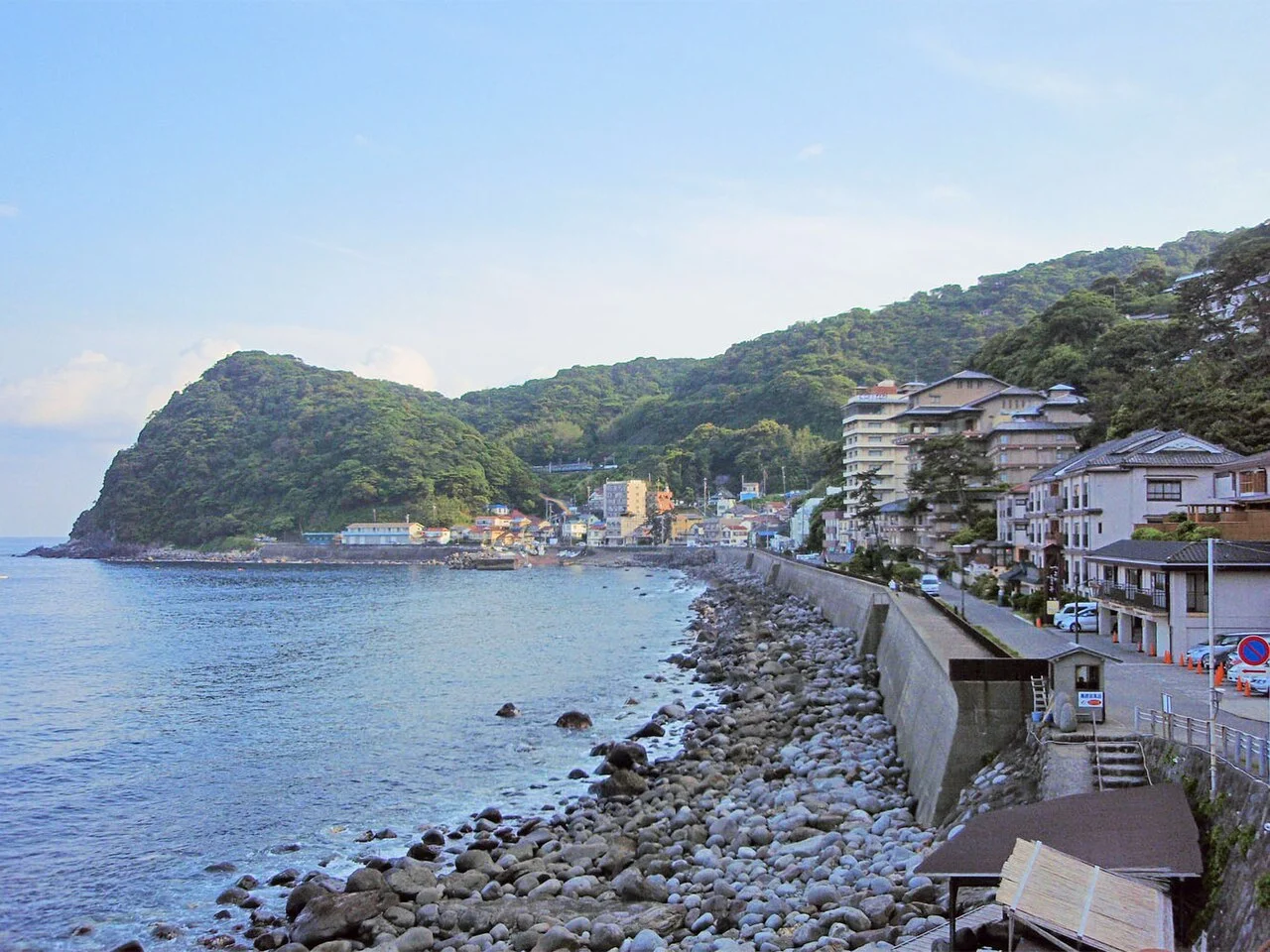
At Inatori Tokai Hotel Yuen, outdoor pools face the sea and broad windows frame the water from the indoor baths; a rock-enclosed cave bath is more sheltered. Non-guests can take an hour-long day bath at Tokai, about fifteen minutes on foot from Izu-Inatori.
Atagawa Prince’s rooftop Kunpu bath opens toward the horizon above the hot-spring town. The Prince day-entry program includes the communal baths and towels. The station approach takes about ten minutes uphill, with stairs. In Hokkawa, Kurone Iwaburo is closed after typhoon and wave damage; Tsuruya Kisshotei and Kissho CAREN admit day guests on reserved lunch-and-bath packages.
Atagawa and Imaihama beaches
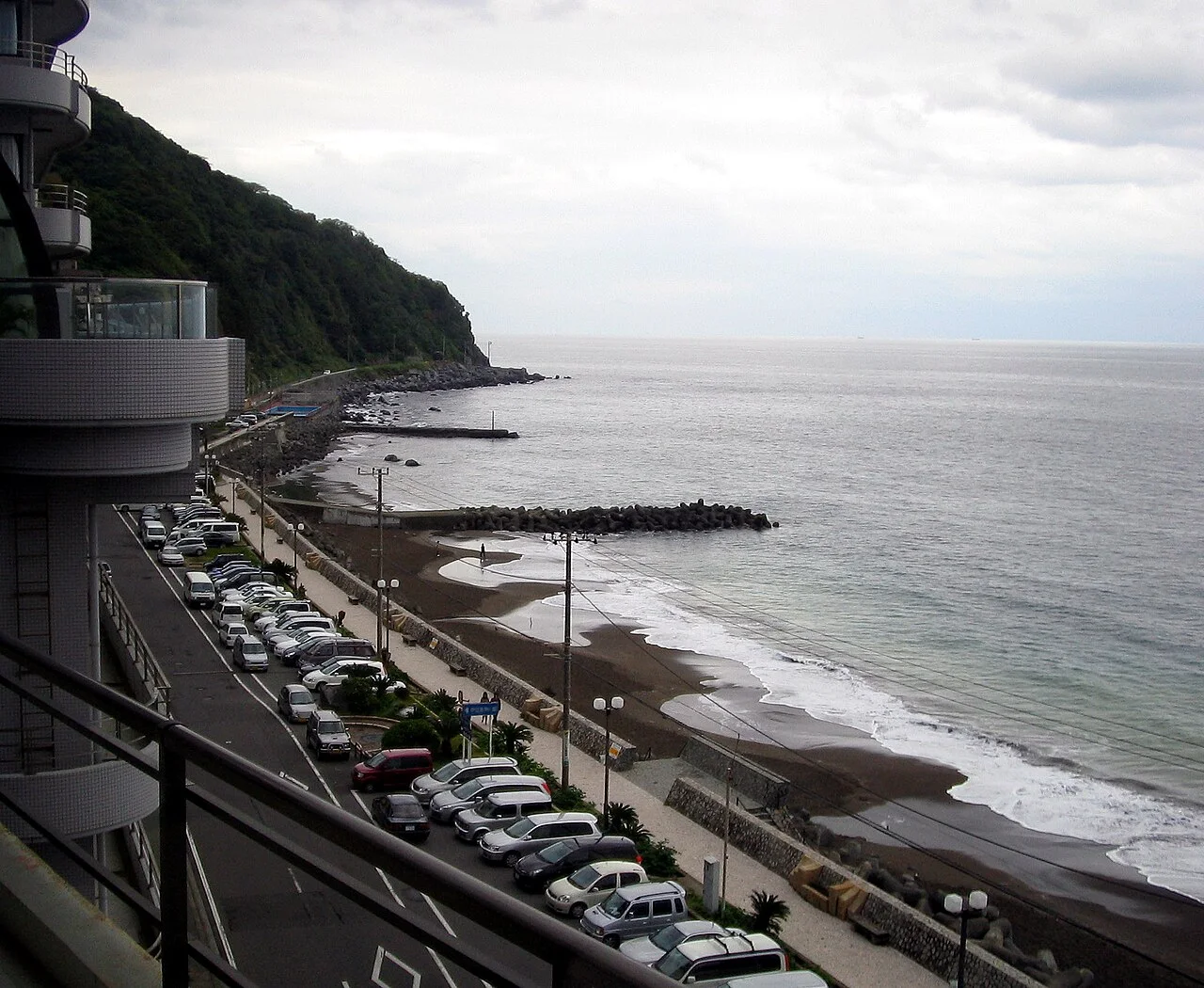
Atagawa YOU Yu Beach is a sandy strip below the coastal hotels, with surf beyond the breakwaters. Walk along the shore after the garden and before an afternoon bath. Farther south, Imaihama beach in Kawazu has roughly 900 meters of sand, about two minutes from Imaihama-Kaigan station. The sandy shore is shallow offshore.
Inatori’s Iso SeaGarden Ikejiri has a rocky shore and a natural sea pool beside a swimming pool filled with seawater. Concrete seating areas and wooden platforms line the seasonal pool facilities, with paid showers and changing rooms. The rocks are uneven underfoot. For a broad stretch of sand close to a station, go to Imaihama.
Hosono’s autumn grassland
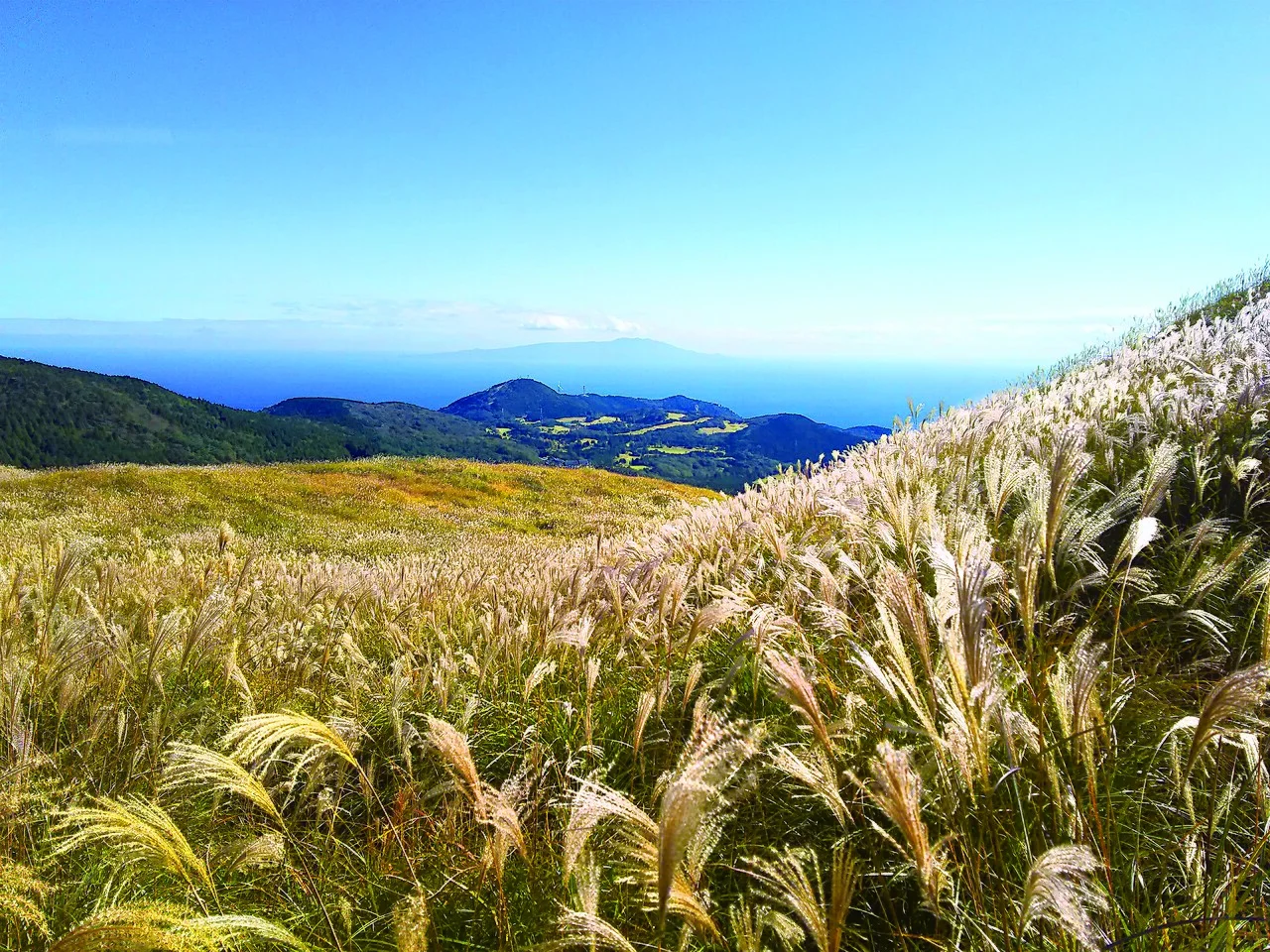
Silver susuki plumes cover Hosono Highlands above Inatori, with the sea and Izu islands beyond the slopes. By late autumn the grass dries to straw gold. The open landscape survives through cutting and burning; four protected wetlands lie within it. The short 1.5 km circuit takes about thirty minutes from Highlands Square. Longer circuits run 3.5 km in about sixty-five minutes or 6.5 km in about 140 minutes. From the end of the longest circuit, walkers climb a steeper path to the summit and return the same way in about thirty minutes. Even the lower paths include steps.
The autumn event and its direct weekend bus have their own visitor terms. On weekdays, reach the private grassland by car or taxi. Stay on permitted paths and outside the fenced wetlands.
Kawazu’s waterfall gorge
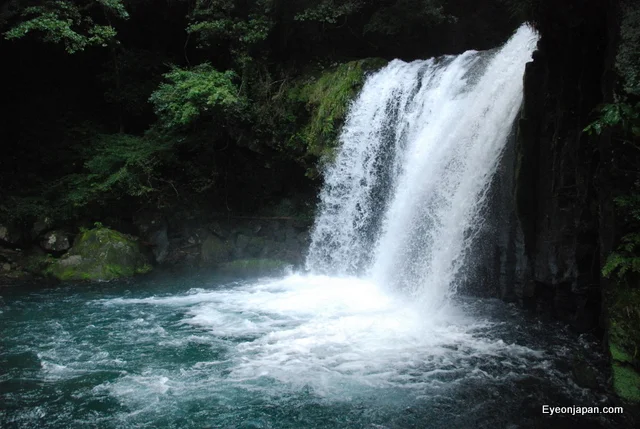
Water tumbles over patterned basalt in the wooded Seven Waterfalls gorge inland from Kawazu. Shokeidaru drops behind the bronze Dancer and I figures; farther along, the rock around Hebidaru resembles snake scales. Suspension bridges cross the stream among the trees. The official promenade is 850 meters and takes about an hour one way from its upper entrance, with additional time for the return.
Buses from Kawazu station take roughly twenty to thirty minutes to the waterfall hot-spring area. Allow a full day from a coastal hotel for the train, bus and gorge walk. Odaru, the lowest fall, stands beside Amagiso’s private bath grounds. The baths are closed after typhoon damage.
Kawazu blossom and Shimoda’s harbor streets
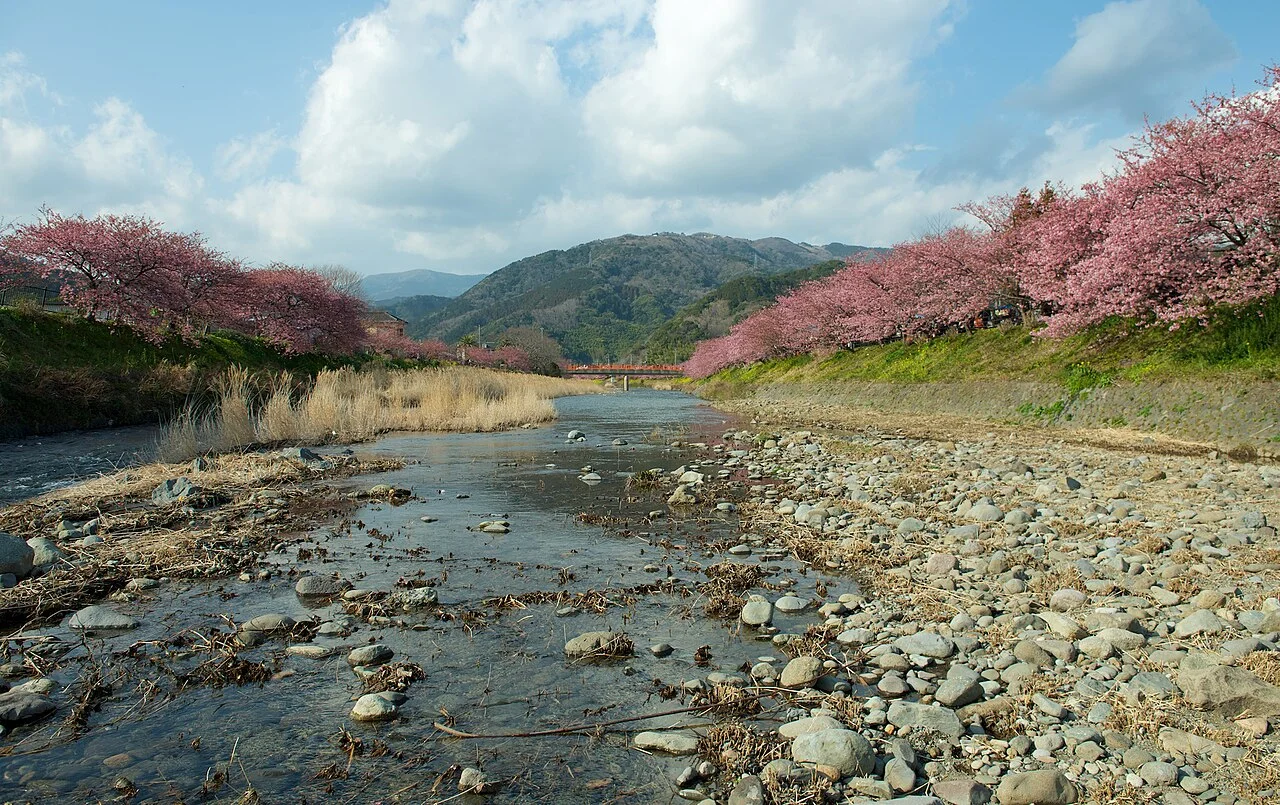
In early February, pale pink Kawazu-zakura begins flowering along the Kawazu River. About 850 trees line the banks, and the bloom can last around a month, with its timing varying each year. Kawazu is two local stops south of Inatori.
For a town day outside blossom season, Shimoda has canal-side Perry Road, Ryosenji’s temple grounds and a harbor associated with the Black Ships. Ryosenji is about ten minutes on foot from the station, with free entry to the grounds. Beside the station, the ropeway climbs Nesugatayama for a wider harbor view; adult return tickets cost ¥1,500 (about US$9.50). From October 16 to March 15, the last ascent is 16:15 and descent 16:45. Local trains run south through Kawazu to Shimoda on the coastal railway.
Map of sights and stations
Loading map…
Places
Reviewed: