
Atagawa Tropical & Alligator Garden: animals and plants
Visit Atagawa Tropical & Alligator Garden in the morning for its crocodilians and hot-spring-heated greenhouses, then continue to the annex for red pandas and garden-grown bananas. The three grounds occupy a hillside above Atagawa’s hot-spring town.
Crocodilians under the dome
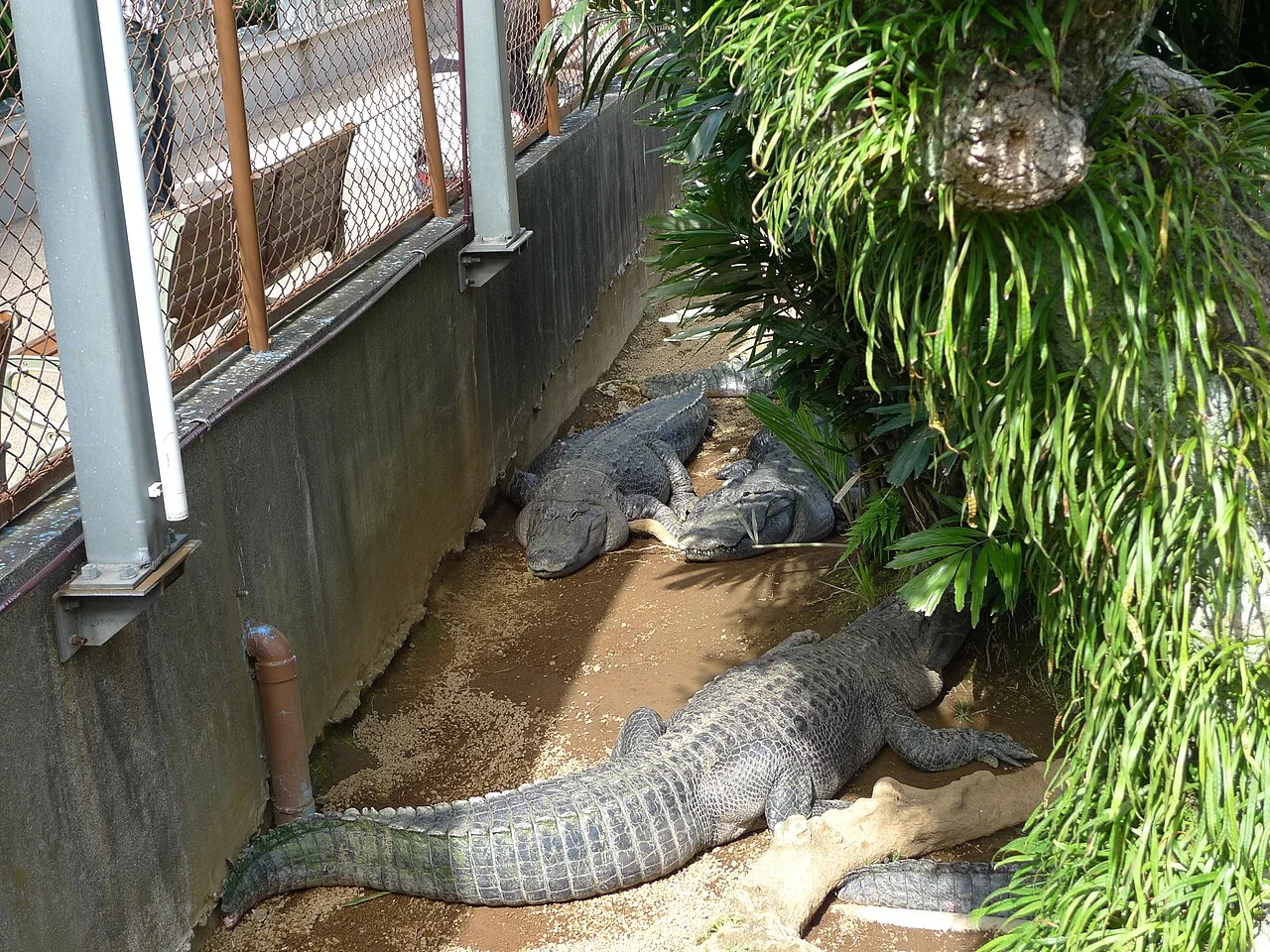
Glass-sided pools beneath the domed roof let visitors look across at the crocodilians and, in some exhibits, up from underneath. Chinese and American alligators appear alongside Nile, Siamese and saltwater crocodiles, caimans and false gharials. Around 100 animals represent sixteen types, including hybrids. The different snout shapes, body sizes and positions in the pools are as much a part of the collection as the large animals. Colossoma fish and alligator gar occupy freshwater displays nearby.
At keeper feeding demonstrations, large pieces of chicken are brought to the animals. The crocodilians may begin moving as the food trolley approaches; the program depends on their condition. This is the main crocodile garden, one of three grounds on the slope above the hot-spring town. The main botanical garden and annex continue the visit beyond these pools. For giraffes, zebras and large open-air herbivore displays, Izu Animal Kingdom’s walking safari is farther south above Inatori.
Water lilies, orchids and the manatee
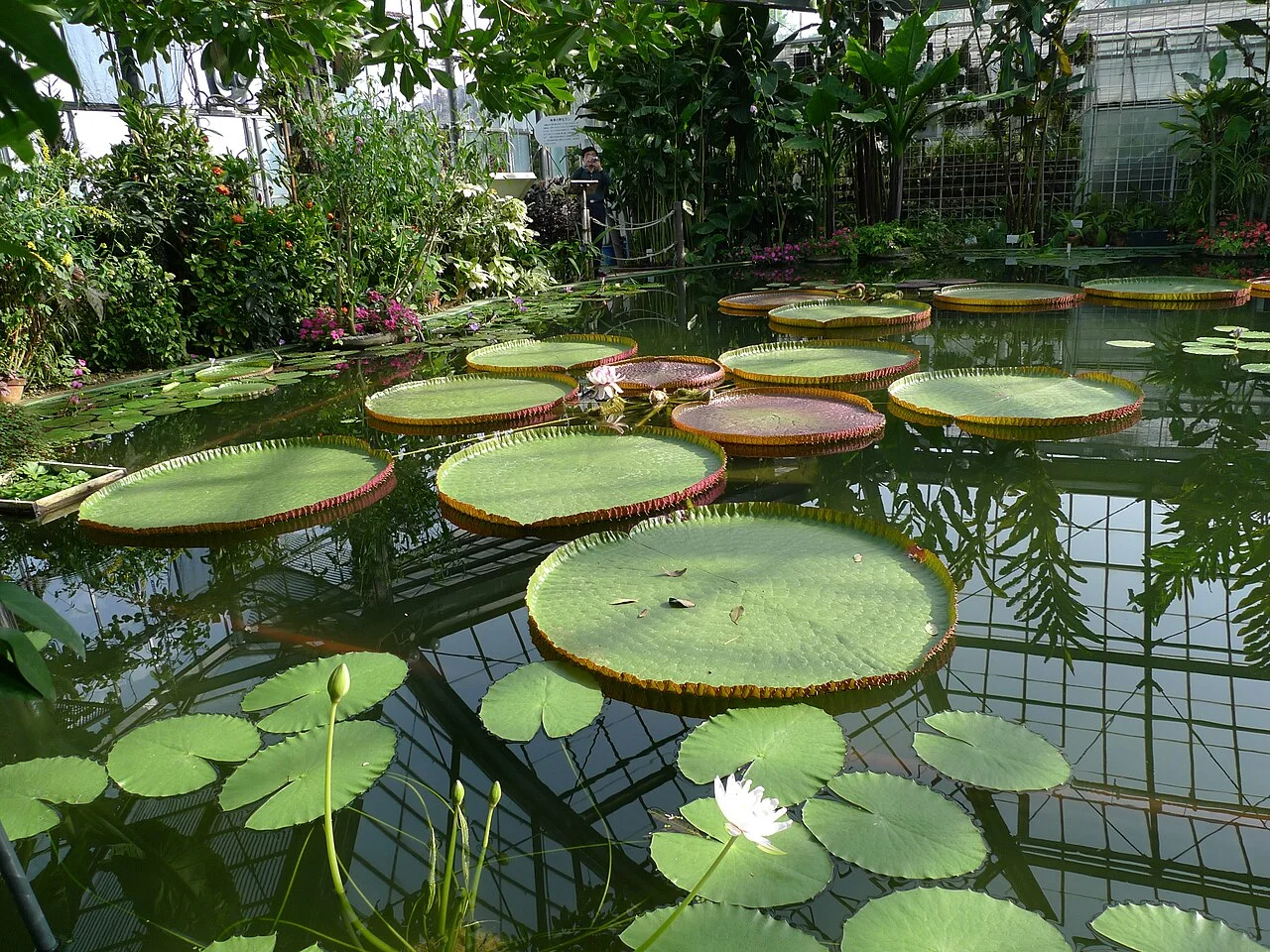
Eight greenhouses hold tropical plants, from bougainvillea and hibiscus to cattleya orchids, bromeliads and jade vine. In the pools, giant water-lily leaves can grow more than two meters across. Around sixty varieties of tropical water lily flower through the year, helped by the heat from Atagawa’s springs. Some night-flowering lilies remain open early in the morning. Jade vine has a narrower season: its turquoise flower clusters hang from March to May.
The broader collection includes about 5,000 tropical plant species, roughly 1,500 of them wild orchids. Among the botanical displays lives Junto, an Amazonian manatee. When he rises to breathe, the white patches on his belly become visible; his food includes Chinese cabbage, carrots and aquatic plants. Baby crocodilians are also displayed in the botanical area. The hot-spring water that supports this tropical collection comes from the same town whose streets descend from the station toward the sea.
Red pandas and the annex orchard
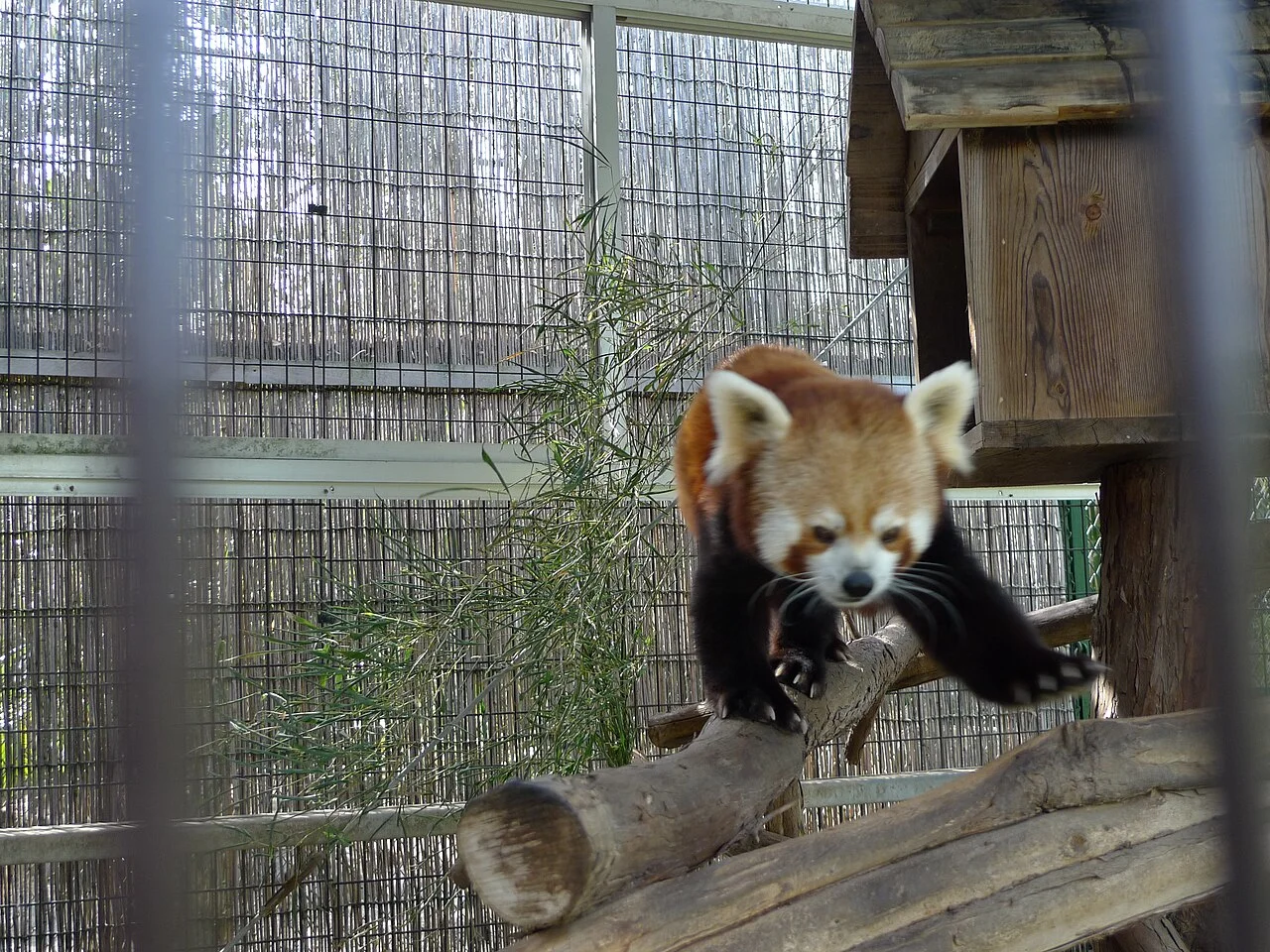
Western red pandas and fruit plants fill the annex/orchard. At feeding time the pandas hold pieces of apple in their paws. Aldabra giant tortoises and alligator snapping turtles are here too, alongside saltwater and Siamese crocodiles and American alligators. Banana, papaya, guava and miracle-fruit plants grow through the grounds.
Hot-spring heat supports more than twenty banana varieties, including Taiwan and Apple bananas. Fruit grows on the plants before being harvested for the annex parlor. More than 300 types of air plant occupy the first annex greenhouse. The three garden grounds spread across a hillside above the main entrance, with outdoor paths between the collections.
Station, fruit parlor and entry
The main entrance, at 1253-10 Naramoto, is one minute on foot from Izu-Atagawa station. Odoriko and connecting local trains serve Atagawa from Tokyo. From the main entrance, continue through the hillside collections to reach the annex and its fruit parlor.
Banana parfaits, pancakes, juice and soft serve use the garden’s harvest. The menu also includes a pineapple boat and banana daifuku with sweet bean filling; Izu venison curry uses ripe bananas. Last orders are at 16:30. After eating, walk down through Atagawa to YOU Yu Beach; the railway station stands uphill from the shore.
Hours and entry
One admission covers both main gardens and the annex/orchard. The garden opens every day 09:00–17:00, with last entry at 16:30. Prices include tax.
| Visitor | Admission |
|---|---|
| Adult | ¥2,000 (about US$13) |
| Age 4 through elementary school | ¥1,000 (about US$6.30) |
| Under 4 | Free |
The main crocodilian exhibits are roofed and the botanical plants grow in greenhouses. Outdoor paths connect the hillside grounds, so visitors also walk in the open air between the covered collections.
Map of the garden and Izu-Atagawa station
Loading map…
Places
Stations
Reviewed: